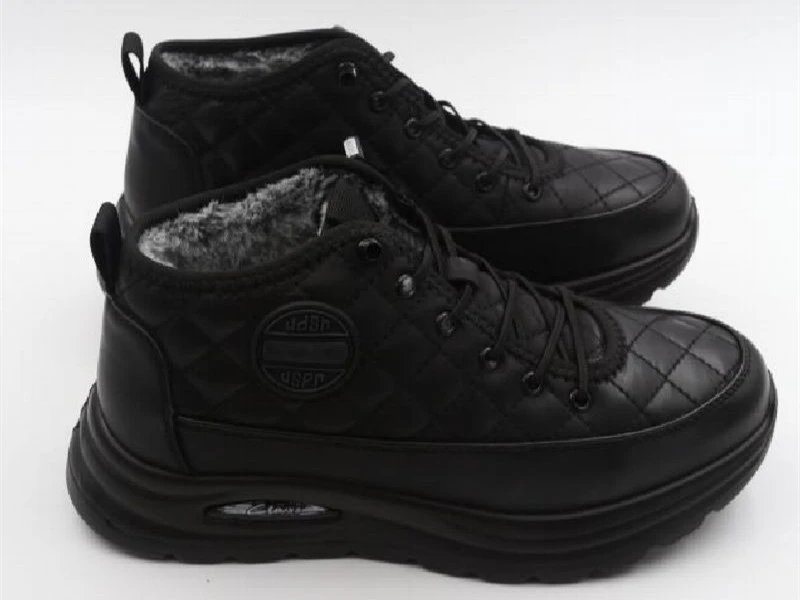
Sole material types: Rubber (RU), Thermoplastic Rubber (TR), Polyurethane (PU), or Thermoplastic Polyurethane (TPU); "Beef-tendon" soles (wear-resistant).
Polyurethane (PU)
The simplest shoes are made with single-density polyurethane outsoles. Polyurethane soles must fulfill two tasks: first, they must be comfortable and lightweight; second-and crucially-they must ensure safety, such as slip resistance. In reality, combining these two functions is difficult; often, only one performs optimally. With a density of around 0.8 g/cm³, polyurethane soles are commonly used in the casual footwear industry. While the production process for single-density shoes is simple and efficient, the resulting products remain high-quality commercial footwear.
Polyurethane/Polyurethane (PU/PU)
For over two decades, the footwear industry has produced dual-density polyurethane shoes using direct-injection molding machinery. Combining a dense polyurethane outsole with a lightweight, comfortable midsole makes it possible to integrate both sets of characteristics into a single shoe.
Thermoplastic Polyurethane (TPU)
This material combination does not quite live up to the hype; single-density TPU outsoles do little to enhance wearer comfort. With a density of approximately 1 g/cm³, TPU soles fail to provide effective sound insulation against footfall noise.
Thermoplastic Polyurethane (TPU)
Advancements by material suppliers are making this type of shoe increasingly interesting. A combination of a thin TPU outsole and a blown TPU midsole represents a promising new material pairing.
Thermoplastic Polyurethane (TPU)
This is arguably the most common material combination used today. TPU/PU offers numerous advantages.